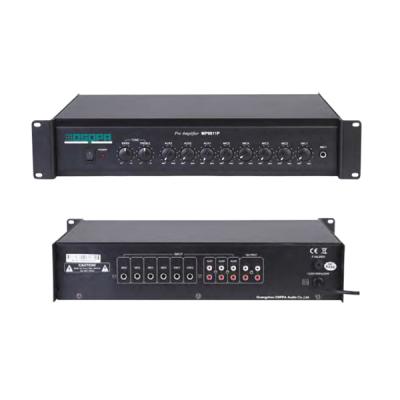

There are more and more types of video conference microphones. Each has its own strengths and the quality is excellent. Therefore, in addition to price, the biggest influencing factor when buying is personal preference. The following is an introduction to the reference elements of a reasonable purchase of microphones.
① The smoothest response
When choosing a video conference microphone, users should be most concerned about its frequency response characteristics. The frequency response must be wide enough to pick up the entire range of sound, so that the quality of natural sound sources does not change significantly.
② Electric output impedance
It should match the input impedance of the mixer, tape recorder or amplifier. The impedance unit is Ω, usually at a frequency of 1kHz. The typical impedance of a dynamic microphone is 150Ω, 200Ω or 300Ω. As a rule of thumb, the input impedance of the device should be at least 3 times the microphone impedance.
③ Proximity effect
Proximity effect is the effect of using near sound technology to boost bass, that is, the microphone is placed a few centimeters away from the sound source.
④ Select the directivity of the microphone
Among all kinds of microphones at the same price, omnidirectional microphones usually have the widest and smoothest response, and are also less sensitive to wheezing, hand-held noise, and wind. Although omnidirectional microphones accept sound waves from all directions well, some users may prefer to accept sound waves from one (one-way) or two (two-way, figure-eight) directions. Video conference microphones can pick up sound sources from a long distance, and capacitive interview microphones can also pick up clear target sounds at a long distance.
⑤ Overload sound pressure
Condenser microphones work in a linear state up to a certain sound pressure level (SPL). This SPL is called overload or maximum SPL, and the frequency is usually 1kHz. If the sound pressure exceeds this value, the output signal will deteriorate due to harmonic distortion. At the maximum SPL, the total harmonic distortion coefficient should not exceed 0.5% or 1%. It is impossible to overload dynamic microphones in normal applications, and they will never actually distort the signal.
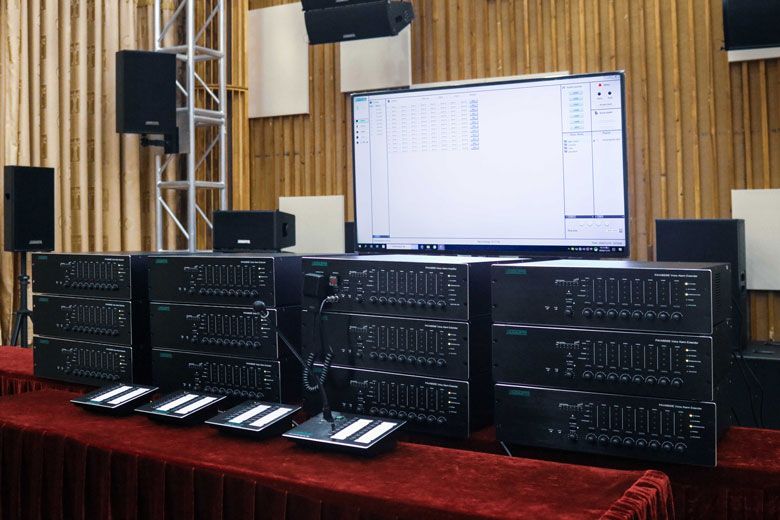 【DSPPA Demo】PAVA8000 EN54 Voice Evacuation SystemNovember 12, 2020Abstract: DSPPA PAVA8000 EN54 Voice Evacuation SystemToday, we are gonna show you a demo about our PAVA8000 EN54 Voice Evacuation System.PAVA8000EN54 Voice Evacuation System can not only support manua...view
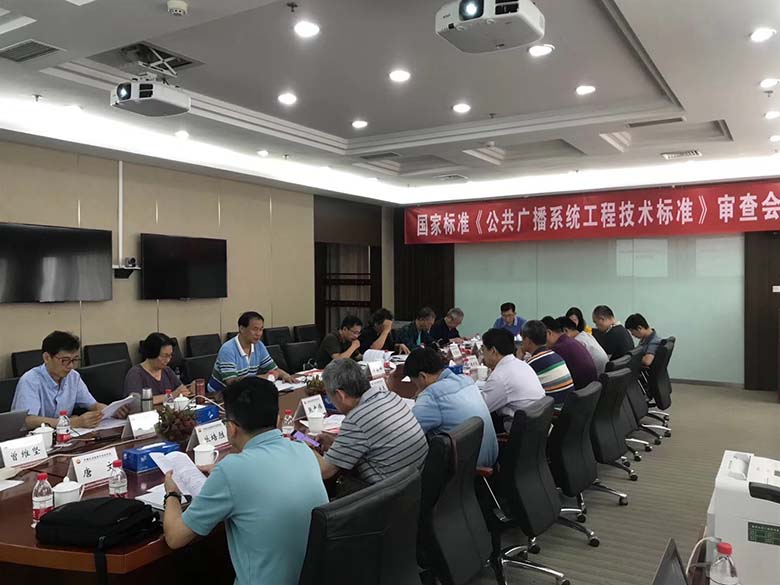 The National Standard Approval Meeting held in BeijingJuly 19, 2019The National Standard Approval Meeting held in BeijingThe approval meeting of the National StandardTechnical standard of public address system engineeringis held in Beijing on July 16, 2019. Xue Chang...view
 EN
EN
 ar
ar
 bn
bn
 fr
fr
 ms
ms
 de
de
 th
th
 id
id
 hi
hi
 pt
pt
 ru
ru
 es
es
